

What actually makes a Daedric Prince a Daedric Prince
Where the Aedra gave up their power to help build Nirn, the Daedra refused. The most powerful of them became Daedric Princes, immortal rulers of their own individual planes of Oblivion, each shaped entirely around that Prince's personality and obsessions. They don't answer to each other, they don't answer to mortals, and they rarely agree on anything except that mortals are useful tools for their own ends.
The Princes you'll actually run into
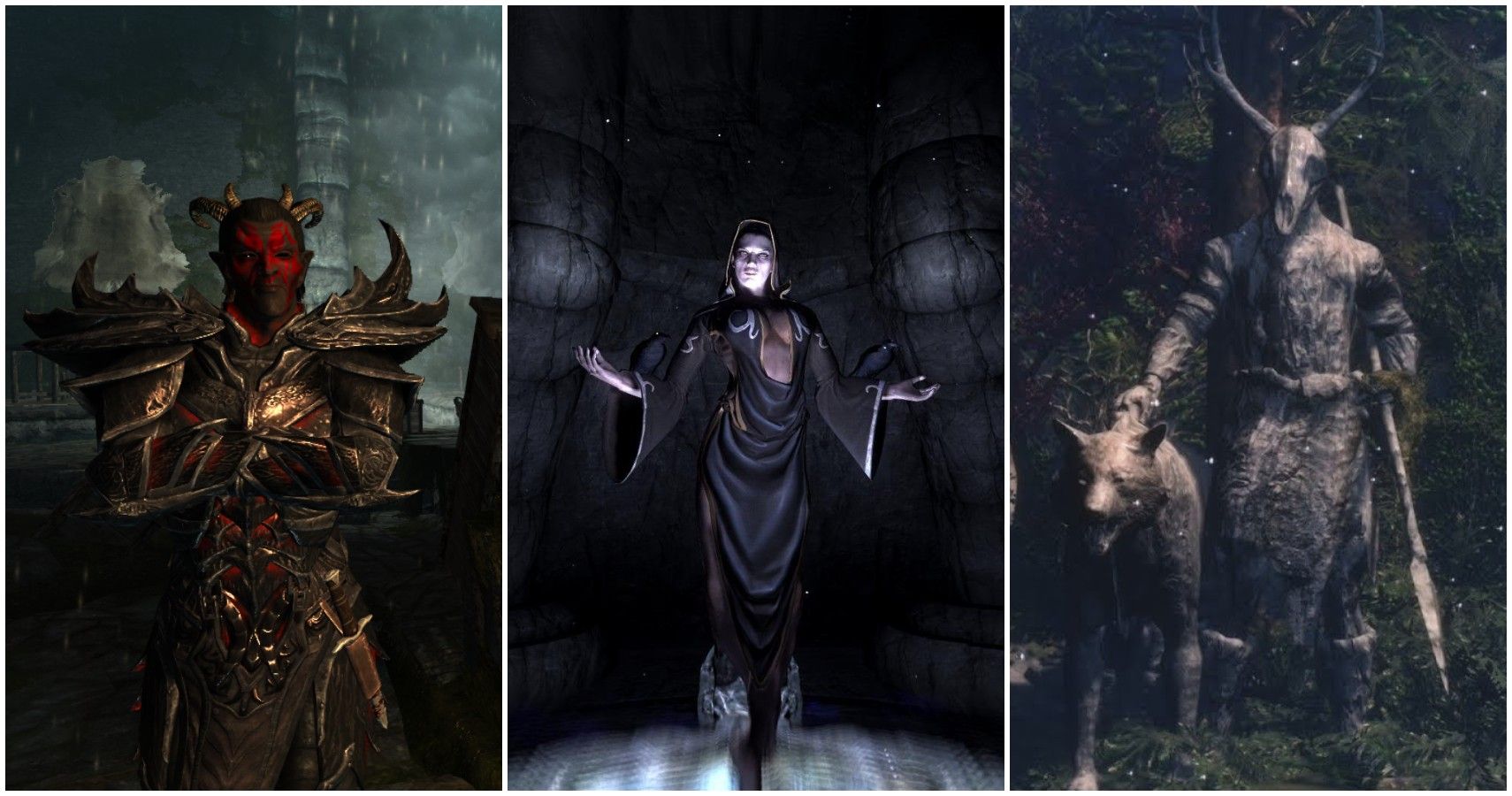
Nearly every mainline Elder Scrolls game includes quests tied to specific Princes, usually built around retrieving one of their signature Daedric artifacts. Here are the ones that come up constantly:
- Sheogorath, Prince of Madness, unpredictable, darkly funny, and the star of some of the series' most memorable questlines.
- Molag Bal, Prince of domination and enslavement, and the in-lore origin of vampirism itself.
- Mehrunes Dagon, Prince of destruction, and the force behind the Daedric invasion at the heart of Oblivion's main quest.
- Azura, Prince of dusk and dawn, deeply tied to Dunmer culture and Morrowind's history.
- Hermaeus Mora, Prince of forbidden knowledge, fate, and fittingly, the Elder Scrolls themselves.
- Boethiah, Prince of deceit and plots, whose worship involves ritual murder among Dunmer traditions.
- Clavicus Vile, Prince of wishes and bargains, always with a catch.
- Hircine, Prince of the hunt, and the origin of lycanthropy.
- Nocturnal, Prince of shadow and luck, closely tied to the Thieves Guild across multiple games.
- Meridia, Prince of light and energy, and one of the few Princes with a genuinely positive relationship toward mortals.
Beyond these, the full roster includes Malacath, Mephala, Namira, Peryite, Sanguine, and Vaermina, each with a narrower but no less specific domain. There's also Jyggalag, Prince of order, whose story is deeply tangled with Sheogorath's in ways later games treat as one of the setting's more mind-bending reveals.
Why they matter beyond a single quest
Daedric Princes aren't just quest-givers, they shape entire cults, artifacts, and recurring conflicts across the series. Worshipping one isn't automatically evil in the setting's own morality either, some, like Azura, have genuine devoted followings that see their Prince as a legitimate object of faith rather than a villain to be tricked.

Where this fits into the bigger picture
Every Daedric Prince exists in contrast to the Nine Divines, the Aedra who chose sacrifice over freedom. That tension between the two groups is one of the deepest running threads in Elder Scrolls lore, and it's worth reading alongside our overview of Tamriel's cosmology if you want the fuller picture.
Curious to meet a few of them yourself?
Shop Elder Scrolls Games →Want the wider picture first? Head back to the full lore overview, or read on for what an Elder Scroll actually is.